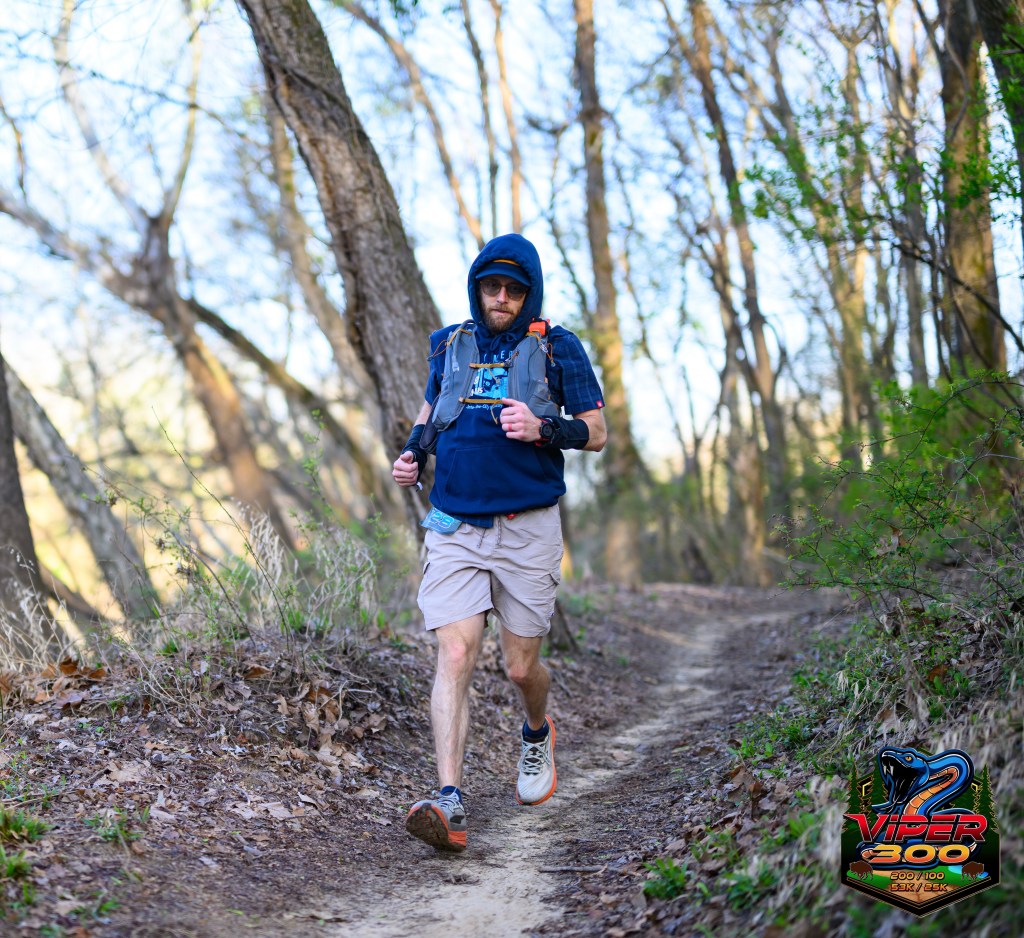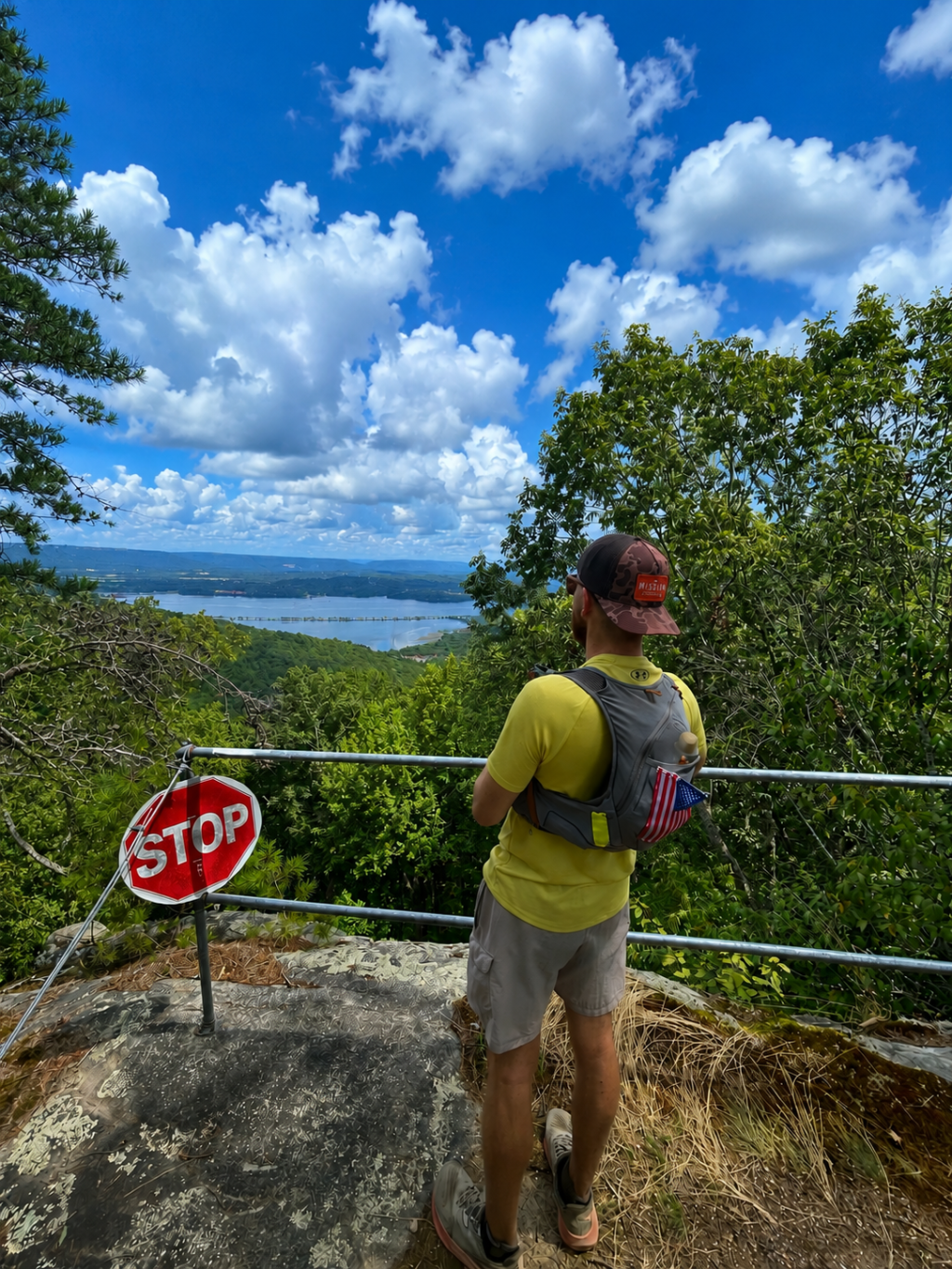
“My problem hasn’t normally been finishing. It has been that sometimes I’ve finished things I never should have begun in the first place.” I’ve said that here and there many times, usually with a clever smile on my face. I’ve felt this problem several times in life. I felt it after finishing my second Ironman race. I never really expected that to be the lens through which I would view my second Vol State race.
The Last Annual Vol State Road Race is a 314 mile foot race, beginning with a ferry ride from Dorena Landing, MO to Hickman, KY, and then into and across Tennessee, before finally dipping into Alabama and finishing at Castle Rock, GA. A 314 mile race can throw a lot of issues at you. After enough miles and days on the road, this race has a unique way of exposing whatever is really going on beneath the surface. My Vol State 2025 story was about perseverance, overcoming pain, pushing through difficulties, and reaching The Rock no matter what. It was about grit and determination, and I made it. 2026 was not that story. This year it was the story of a man on pace to achieve his goal but then deciding not to.
A few years ago, I realized something important: sincerity works for me. I’ve tried to be open rather than hiding or pretending I’ve got everything figured out. That’s harder than it sounds, especially with a race where everyone expects stories of grit and determination. I’m not going to force myself to write another one of those stories. This one is going to be different because it is sincere.
I convinced myself that I was not an 8-day finisher like the 2025 race said I was. I had two major missteps that resulted in a lot of time lost. I entered 2026 with the goal of finishing within 6-7 days. I had trained for a year. I had plans and backup plans. Even though time was lost waiting out thunderstorms on day 1, and walking in rain most days, I was still executing my plan. When I reached mile 201, I was still on pace. But pace was not my problem. Lack of desire was the problem.
Last year’s race was an emotional roller coaster. There were tears, moments of despair, moments of gratitude, and memories that will last the rest of my life. Every difficult stretch seemed to teach me something about myself. This year felt strangely absent of all that. Emotions never came. The only tears came at mile 185, when the thought crossed my mind that this is one of those things I never should have begun in the first place.
The first crack appeared on the very first night when a close friend dropped from the race. We had run through some gnarly electrical storms. And he had developed some devastating blisters that prevented him from continuing. He trained with me all year, and we have grown close. Part of me was relieved when he told me to go on without him. Part of me wanted to drop with him. I kept moving, but something shifted. Most of my years of running have been alone. But over the past year, I’ve been running with friends. The idea of now taking on the rest of this race alone was not appealing. I had already run the 2025 race alone.
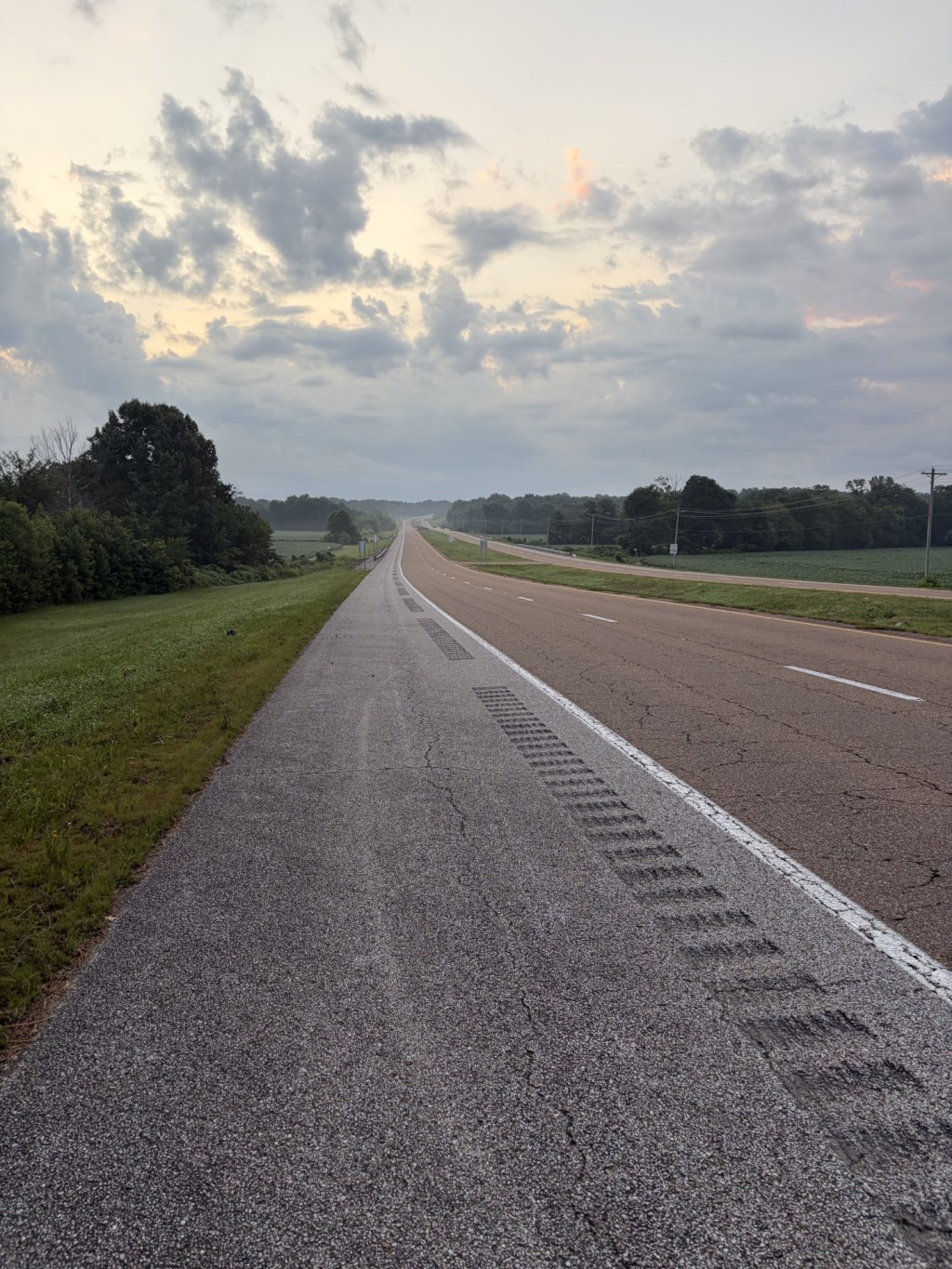
I pressed on throughout the first night, which included a desolate stretch of road during the dreary early morning hours. Running down miles of roads of nothingness on all sides, around 2-4am in the morning, is tough! My plan had been to reach a hotel at mile 55 and sleep through those difficult hours, but the electrical storms had derailed that plan. The new plan called for catching several short naps over the first two days, staying on pace despite storms and rain.
Multi-day races are full of highs and lows, ups and downs. When you’re low, you don’t make important decisions. You eat, hydrate, and sleep. Eventually, the high comes again, and suddenly you’re knocking out tons of miles. That’s the rhythm of this race. My lows this year were still lows. But the highs were more like baseline rather than highs. I wasn’t depressed. I wasn’t all that excited. I just kept moving because that’s what the plan said to do.
I had some newer friends and acquaintances in the race, but they were either ahead or behind me, as running paces rarely match up. As the race unfolded, I found myself checking on the ones further back in the pack. Several were trying for their first finish, and I was excited for them. Some had joined me for some of the special challenges and training adventures I had put together over the past year. I found myself caring more about their finish than about my own finish time. The goal that had motivated me for months was slipping away.
I ran all through the night, arriving at an Angel tent in Parsons early on Saturday morning. More electrical storms were coming, and it was going to be another tough day. Sure enough, the storms arrived just after I had reached an Angel tent just prior to Linden. After those passed, I pressed on to the hotel in Linden for a short sleep. I was dreading the 17 mile overnight stretch of desolation from Linden to Hohenwald. That is where I had my first trouble last year, when I skipped sleep and trudged on. The short hotel sleep was not as much sleep as I needed, but it was enough to get me through this stretch without any issue this year. A quick nap at the Church Angel in Hohenwald, and I was ready to move again.
My body began presenting some new challenges that were difficult to ignore. I had zero blisters, again. Everyone complains of blisters. I had none in 2025, and none in 2026. That sort of makes it even more frustrating. I was probably dealing with less than most people out there. Instead, I had pain. My right knee hurt quite a bit. But it was my right foot that was the most painful. The tendons where my leg connected to the top of my right foot had become so inflamed that it looked and felt like they were trying to burst through my skin. I hadn’t told anyone about it; I was determined not to call home and complain. But that was part of the picture.
Both years I’ve heard a lot of negative comments about the stretch from Hohenwald to Hampshire. For me, this is the stretch leading home to Maury County. Rather than look at it as difficult miles, these have been miles of anticipation. Pain was building in my foot, and my pace was slowing quite a bit. I made a plan for the day: Get to the hotel in Columbia and sleep. After a quick stop at the Maury County Fire Department in Hampshire, I was on my way. Another brief stop to see some friends at the Crossgate Angel tent, and I was getting closer to the hotel. It was after midnight when I arrived. I let myself sleep 4 hours before I was moving on again.
As I was leaving the hotel, I had a growing sense that something wasn’t right physically. As I reflected on the miles up to this point, I was not enjoying the journey. I didn’t really care about my time goal. I didn’t want to leave Columbia. I was feeling symptoms of dehydration coming. I had felt it on day 1, but it subsided after sitting in the air conditioning and drinking sports drinks for an hour. Now, at the beginning of day 5, I was again feeling it. I made it to the Nutt House angel stop, and enjoyed a good time with them. They are amazing Angels. I really was struggling to figure out why I was not enjoying this race, and why it had meant so much to me to climb a mountain I had already climbed once before. I really didn’t want to leave their place. And it was so hot and humid. I was not looking forward to the 15 mile stretch to Lewisburg in full sun. I stopped several times to lean on a guardrail, struggling to get my body temperature down, and feeling the clammy feeling of dehydration.
When I reached a restaurant at mile 200, in Lewisburg, I couldn’t eat. I wanted to eat, but the food sat untouched. And ahead of me was another section of the course that had caused significant difficulty last year. There was a hotel there, but I didn’t want to stop so soon. I had only been running for about 23 miles, which was not quite half of what I had planned for the day. Resources looked sparse for the next 31 miles, which would be covered at nighttime, the same time of day I had covered it the previous year. Those memories were fresh. I had the feeling of being in a place I didn’t want to be.
At mile 201, I knew I was going to get in a bad spot if I continued: dehydrated, alone, and stuck on the side of the road in another desolate stretch of nothing. So, I did something I had never done in an ultramarathon: I turned around and walked back to the hotel at mile 200. I wasn’t quitting. I was giving myself permission to rest. I planned to sleep as long as necessary and didn’t even set an alarm. I had learned in the 2025 race not to make important decisions when you are exhausted. When I woke, I still didn’t want to continue. It wasn’t a decision made in the “race fog” of exhaustion. My head was clear, and I still wanted to go home. I realized I no longer wanted what I had spent a year pursuing. But I again began running up the road.
Another thing slowly surfaced during the race: my motives for this race were not sufficient. I had convinced myself that my time goal was why I was there. I found myself checking the live tracker and noticing my name climbing higher on the leaderboard. The goal was coming within reach. The strange thing is that’s never been me. I’ve never cared about beating the person in front of me. I’ve always enjoyed taking on these challenges because of what it taught me, not because of who I beat. I think I had made an idol out of this race. For a year I was obsessed over it. I planned, studied, and calculated my finish time. And I think I did it because I enjoyed the admiration that came after last year’s finish. I enjoyed hearing that I had inspired people. But somewhere along the way I started enjoying the admiration as much as I enjoyed giving encouragement.
I made it back to mile 201 again and made a choice. My knee and foot were hurting again already, and my body was feeling clammy again. Time goals seemed very small and insignificant. And I was not proud of doing it to impress others. I realized this race wasn’t as important as I had convinced myself it was. I continued on to mile 205, where there was a good place to sit down, and ended my race.
The surprising part is what has happened over the past week: I have not regretted it once. I’ve regretted starting the race with a goal that was insufficient. It reinforced something I did not want to accept from last year’s race: I finished the race once, and that was enough. I’ve realized what excites me is not climbing the same mountain a second time. I get excited about climbing new mountains. I need to find a new mountain.
By the end of a race, I usually have a lesson all wrapped up with a bow. This one did not give me that. It left me with more questions than answers. How did something I loved so much become something I dreaded? Was it because I had already climbed the mountain? Was it because I’ve learned climbing mountains with friends is more enjoyable? Was it because I turned the race into an idol? Was it because I replaced adventure with achievement? I still don’t know.
I’m not finished racing. I’m not finished running. I’m definitely not finished with adventures. I was itching to run every day last week, but forced myself to rest and recover. The question I’ve been asking myself this week is: “What kind of runner am I right now?” Then a thought hit me: I need to get back to running because I love running, because I love time to think, and because I love being outside. I need to get back to running 3 miles simply because it’s Monday. Run 5 because it feels good. I need to allow the next mountain to reveal itself instead of forcing it. Maybe that’s the lesson? Just keep running until the next mountain presents itself. It’s Monday, and I feel like running 3 miles.